What is Basic Electricity Full 2025 Guide Introduction:
What is Basic Electricity Full 2025 Guide Learn everything about basic electricity in this complete guide – from electric current, voltage, resistance, circuits to real-life applications. A must-read for students, beginners, and electrical aspirants.Electricity powers almost everything in our daily lives—from lighting our homes and charging our phones to powering factories and computers. However, what is electricity and how does it function?
Understanding basic electricity is the first step toward grasping the vast field of electrical science and electronics. Whether you’re a student, a technician, or simply a curious learner, mastering the fundamental concepts like current, voltage, resistance, power, Ohm’s law, and circuits will open up endless possibilities in both academics and technology.
This blog post offers a detailed, beginner-friendly guide on the basics of electricity, its components, terms, and real-world applications. Let’s demystify the science behind the most powerful invisible force in the modern world! One of the most significant and intriguing discoveries in human history is electricity. It powers everything—from our homes and schools to industries and cities. But understanding how it works can seem confusing to beginners.
What is Basic Electricity Full 2025 Guide Learn everything about basic electricity in this complete guide – from electric current, voltage, resistance, circuits to real-life applications. A must-read for students, beginners, and electrical aspirants.This FAQ guide on basic electricity aims to answer all your questions, using simple language and real-life examples. Whether you’re a student, electrician trainee, or a curious learner, this post will help you understand all the core concepts.
What is Basic Electricity Full 2025 Guide Let’s dive into the world of electrons, circuits, current, voltage, and more!
What is Basic Electricity Full 2025 Guide Overview:
What is Basic Electricity Full 2025 Guide Here’s what you’ll learn in this almost Here
⚡ Difference between static and current electricity
🔋 Concepts of electric charge and electrons
🔁 What is voltage, current, resistance, and power?
💡 Ohm’s Law explained with examples
🔄 AC vs DC current
🔧 Basic components of an electric circuit
🔎 Series and parallel circuits
🧠 Electrical safety and common precautions
🧰 Tools used in basic electrical work
🏠 Real-life applications of electricity
🎓 Key terms, definitions, and formulas
What is Basic Electricity Full 2025 Guide Conclusion:
What is Basic Electricity Full 2025 Guide Electricity is the foundation of the modern world, not just a topic in physics. From a glowing light bulb to the massive electrical grid, everything starts with the basics of electricity—voltage, current, resistance, and power.
Understanding how electrons flow, what circuits do, and how components interact lays the groundwork for deeper learning in electronics, electrical engineering, and energy systems. Whether you’re pursuing a career in the electrical field or just want to learn how things work, a solid grasp of basic electricity is both essential and empowering.
This guide was crafted to simplify those core concepts, helping you take your first confident step into the world of electricity. Stay tuned for more in-depth posts on wiring, appliances, electrical safety, and circuit design! Electricity may seem complex at first, but once you understand the basics — voltage, current, resistance, power, circuits — it becomes logical and even fascinating. This FAQ post covered almost every question beginners ask about basic electricity, helping you build a strong foundation for further learning or practical work.
Whether you’re preparing for exams, working on a DIY project, or just eager to understand how lights turn on with a switch — your journey starts with this knowledge. Stay safe, stay curious, and let the spark of learning keep flowing!
FAQs on basic electricity and Basic Concepts of Electricity:
- What is electricity in simple terms?
A) The flow of electrical energy produced by moving electrons is known as electricity.. It powers devices and appliances, lights bulbs, runs machines, and enables communication systems.
- What is electric current?
A) The movement of electric charge, or electrons, through a conductor, such as copper wire, is known as electric current.. It is measured in amperes (A).
- What is voltage?
A) Voltage (V), also called electric potential difference, is the “push” that moves electrons through a circuit. It is measured in volts (V).
- What is resistance?
A) The obstacle to a conductor’s current flow is known as resistance.. Materials like rubber have high resistance. It is measured in ohms (Ω).
- What is power in electricity?
A) The rate at which electrical energy is used or transported is known as power.. It is measured in watts (W). Formula:
Power = Voltage × Current (P = V × I)
- What is energy in an electrical context?
A) The whole amount of work that electricity may accomplish is known as electrical energy.. It is measured in kilowatt-hours (kWh), commonly seen in electricity bills.
- What are conductors and insulators?
A) Conductors: Materials that allow electricity to flow easily (e.g., copper, aluminum).
Insulators: Materials that do not allow current to flow (e.g., plastic, rubber).
- What are free electrons?
A) Free electrons are loosely bound electrons in atoms that move easily, enabling the flow of electric current in conductors.
Ohm’s Law and Measurements
- What is Ohm’s Law?
a) The relationship between voltage (V), current (I), and resistance (R) is defined by Ohm’s Law:
V = I × R
You can locate the third if you know the first two.
- Why is Ohm’s Law important?
A) It helps us design and analyze electrical circuits, predict behavior, and ensure the safety and efficiency of electrical systems.
- How is electrical current measured?
A) Using an ammeter. It must be connected in series with the circuit.
- How is voltage measured?
A) Using a voltmeter connected in parallel across two points in a circuit.
- How is resistance measured?
A) Using an ohmmeter or a multimeter set to the resistance mode (Ω).
Types of Electricity
- What are the two main types of electricity?
A) 1. Friction and charge accumulation are the causes of static electricity.
2. Current electricity – the continuous flow of electrons through a conductor.
- What are AC and DC currents?
A) AC (Alternating Current): Changes direction periodically. Used in homes and industries.
DC (Direct Current): Flows in one direction. Found in batteries and electronics.
- Which is safer: AC or DC?
A) Both can be dangerous. AC is more commonly used, but high-voltage DC can be fatal too. Always follow safety precautions.
Circuits and Components
- What is an electric circuit?
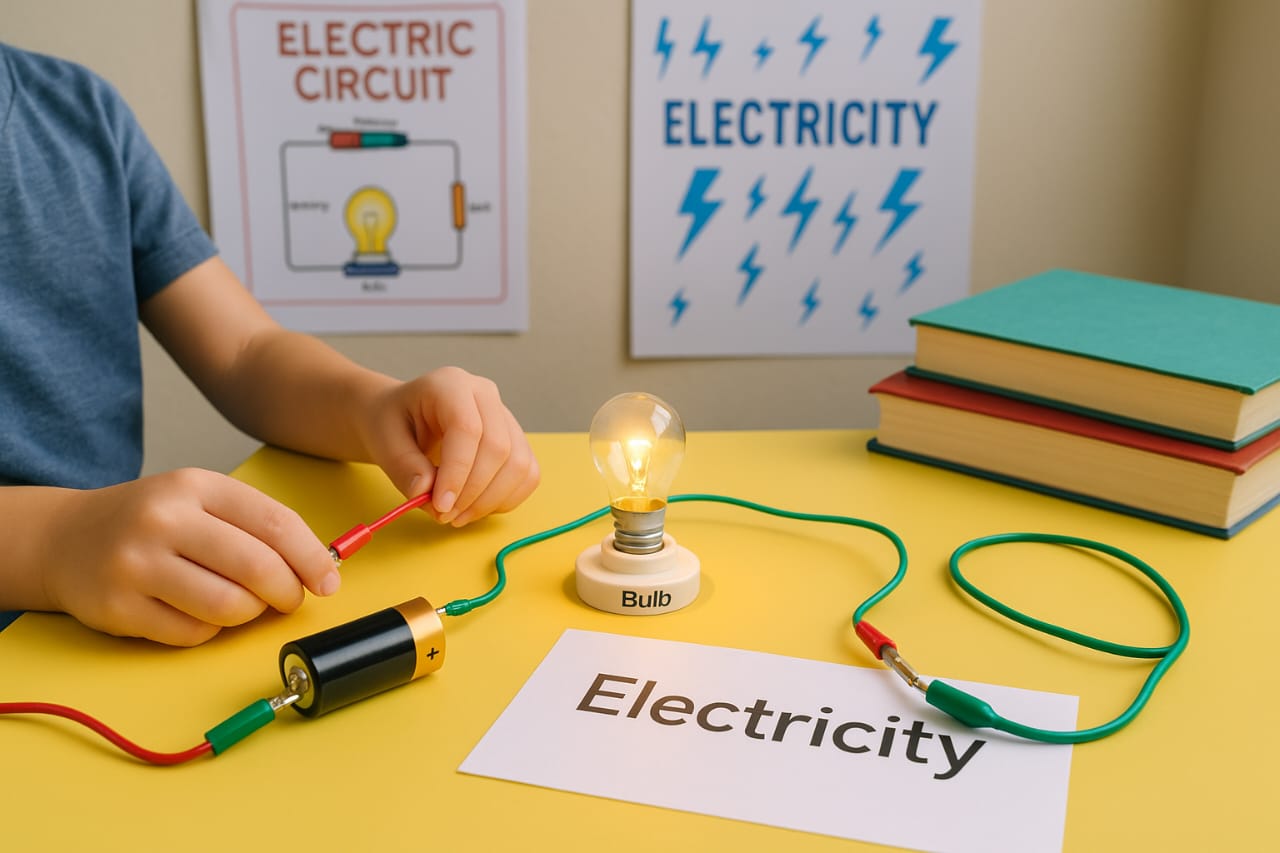
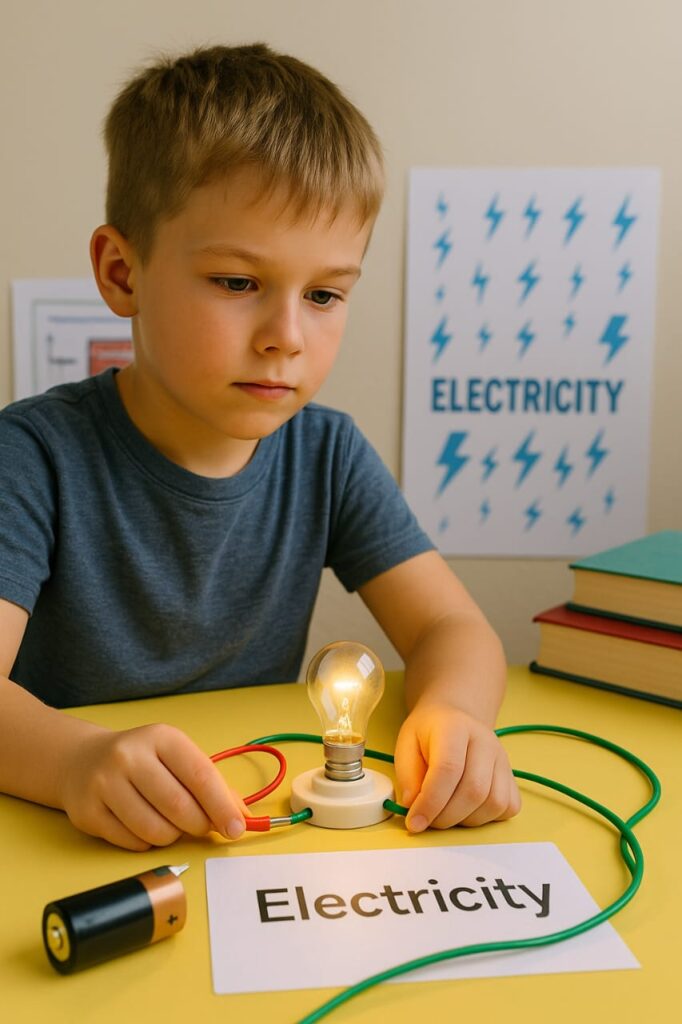
A) A complete path through which electric current flows. It includes power sources, conductors, loads (like bulbs), and switches.
- What are series and parallel circuits?
A) Series circuit: Components are connected one after another. Current is the same through all.
Parallel circuit: Components are connected side by side. Voltage is the same across all branches.
- What happens if a bulb goes out in a series circuit?
A) All of the bulbs go out, and the circuit breaks.
- What happens if a bulb goes out in a parallel circuit?
A) Since each bulb follows its own course, the others keep working.
- What are common components in a circuit?
A) Battery: Provides voltage
Resistor: Limits current
Capacitor: Stores energy
Switch: Opens or closes the circuit
LED/Bulb: Converts electricity to light
Wire: Conducts current
Real-Life Applications and Importance
- Where do we use electricity in daily life?
A) Lighting
Charging phones
Operating appliances
Computers and internet
Transportation (e.g., electric cars, trains)
- How do electric fans, heaters, or bulbs work?
A) They convert electrical energy into:
Kinetic energy (fans)
Heat energy (heaters)
Light energy (bulbs)
- Why do homes use AC power?
A) AC is easier to transmit over long distances and can be easily converted to different voltages.
- Can basic electricity knowledge help in daily life?
A) Yes! It helps in:
Fixing simple electrical issues
Understanding power consumption
Enhancing safety around appliances
Electrical Safety & Precautions
- Is electricity dangerous?
A) Yes. Even small currents can be fatal. Always turn off power before handling any electrical work.
- What are some basic safety tips?
A) Never touch wet electrical devices
Always wear rubber slippers while repairing
Use properly insulated tools
Turn off main switch before checking wiring
- What is a fuse or circuit breaker?
A) When the current is too high, a fuse melts to protect the circuit. A circuit breaker automatically trips and cuts the power.
- What causes electric shocks?
A) When your body becomes part of the current path, electricity flows through you, causing shocks.
- How can we prevent electrical fires?
a) Avoid overloading sockets
Use certified wiring
Install circuit breakers
Don’t use damaged cables
Learning and Career in Electricity
- Who should learn basic electricity?
A) Students
Electricians
Engineers
DIY hobbyists
Anyone using electrical equipment regularly
- What are careers in electricity?
A) Electrician
Electrical Engineer
Power Technician
Maintenance Engineer
Solar Technician
- What tools are used in basic electrical work?
A) Screwdrivers
Multimeter
Wire cutter/stripper
Pliers
Voltage tester
- What is a multimeter?
A) A tool that measures voltage, current, resistance, and more. Essential for testing and troubleshooting.
- Can I study electricity online?
A) Yes. Many platforms, like:
NPTEL
Coursera
YouTube
Khan Academy offer free tutorials and certification courses.
Advanced Questions for Curious Minds
- What is a capacitor?
A) A device that stores electrical energy temporarily. Used in fans, motors, and power supplies.
- What is a diode?
A) A part that permits only one direction of current flow. Found in power converters and chargers.
- What is earthing or grounding?
A) Connecting electrical equipment to the ground to safely discharge excess electricity. It prevents electric shocks.
- What are renewable sources of electricity?
A) Solar
Wind
Hydropower
Geothermal
Biomass
These are eco-friendly alternatives to fossil fuel-based power.
- What is the future of electricity?
A) Smart Grids
Wireless electricity
Energy storage (batteries)
Electric Vehicles (EVs)
Solar homes and automation
Electricity will continue to revolutionize how we live and work.